Showing posts with label learning. Show all posts

I don't like the kind of people they are becoming!

I was talking to a student today about what kinds of things she thought needed to happen in her school with the new year coming up. 

She said something so insightful, that I could not believe that it was a 7th grader saying it to a bunch of adults. She elaborated on a concept that many teachers do not yet grasp. The clarity and simplicity with which she came to her conclusions was astounding. 

She said (a little paraphrasing from my memory), "We need to do something about the discipline at our school. When I see what these kids who have to go into ISS (in-school suspension) become…well I dot like the kind of people they are becoming. Going to ISS doesn't help them do anything different and that makes me sad."

I asked her what she thought should happen and she said, "I don't know what the best thing to do is, but I know ISS is not working for the kids at my school, because it doesn't make them change anything." 

We were then able to have a discussion about what we, as adults, can do to help kids who make mistakes learn how to make better decisions. This girl was a little sheepish to say these things to a bunch of educated adults, but she was right on the money in her assessment of the situation. 

I admire this girl for saying what she believed. I admire her for being perceptive and aware of the situation. 

Have a Good Life. 


Asking the Right Questions

I think I am a pretty smart guy, but when it comes to things dealing with medicine, I realize that I am way out of my league. I try to be aware of what is going on, often struggle mightily understanding what doctors are talking about. So, there are two parts to this asking the right questions.

1. Ask the right questions as a patient.
For me, I need to ask questions about the things the doctors are saying. So, while I sit here with my daughter in the Emergency room trying to figure out what is wrong with her, I am asking a lot about what they are saying so I can better understand what is going on and so that I can relay that back to my wife who is with the other kids at home. It is the first time I have tried so hard to understand what is going on. Usually, I just trust what the doctors say, but today, I am trying to really understand it.

2. Asking the right questions when you are trying to help someone.

There is a stark contrast between the resident and the head ER doctor. The resident was asking questions about this situation (bloody stool) while the head doctor was asking about other aspects of my daughter's health. It was fascinating to see how connecting a couple more dots. As of right now, we still don't know anything. But, I could tell the doctor was trying to puzzle it out. The resident asked a couple questions that led to a specific diagnosis and settled on that. The head doctor didn't agree with that diagnosis because there was something missing. That led her to ask questions about other areas of my daughter's health. It didn't lead to a diagnosis, but it almost ruled out another.

The real question is, what are the right questions?

That, I don't know the answer to, but here is one idea of how this applies to education. If I ask one of my teachers how I can help her, she will never tell me what she needs. If, however, I recognize a need (by being thorough in my questions to her) and then offer specific help on that area, she will be much more likely to accept it.

Have a Good Life.


Advice From an Experienced Principal #summerblog12

Go with your gut when hiring. Never place blame on your superiors

Since we are a Title I school in school improvement, we have a consultant who helps us. He is about 75, and was a principal for about 750 years. At the beginning of the year, he spent a lot of time talking with me and my principal about what our school was like, what our philosophies are about education, and our goals for the school. He is an extremely nice man, and very helpful.
He gave us two pieces of advice, in particular, that are really great, and have stood out to me since he said them, so I figure I should probably write them down somewhere.
  1. When you hire someone, go with your gut, because it is always right. If you feel like you shouldn’t hire someone, listen to that, because they will likely cause you nothing but drama.
  2. Never place blame on the “district” or a superior. If you can’t justify why you are doing something on your own, you shouldn’t do it.
These two pieces of information are really quite simple, but there is a lot of power behind them.
There were two people that I have been involved with in hiring in my career that really illustrate this point well (I wasn’t the one making the decision, so my feelings on this are pretty much worthless, except as it relates to this lesson from our consultant). One, I felt like we shouldn’t hire, and the other I felt like we really should, notwithstanding some warning signs. The one I didn’t feel good about, turned out to have a lot of drama in her life, and that was really sad. The one I did feel good about, turned out to be a really great employee. Since these two experiences happened to me, the advice from our consultant immediately clicked and made sense in my mind.

Follow your heart. It is usually pretty good advice.

The other one, placing blame, relates to enforcing policies and procedures with teachers. The way this makes the most sense to me is to relate it to teachers and their students. We tell teachers all the time that when they send a student to someone else to deal with the problem, they lose a lot of credibility in that student’s eyes. They lose power and authority. What is worse, when a student goes to the administrator because the teacher is at her wit’s end, the administrator cannot possibly feel the frustration that the teacher feels, and so the conversation with the principal and student is a lot less powerful than the talk would be with the teacher. The principal can’t feel the frustration, and the student doesn’t actually work out the problem he has with the teacher, so it perpetuates.

When I was doing my internship, a teacher brought a whole classroom full of students to the vice principal’s office and told them that they were not leaving until the student who had taken a pencil from another student confessed. The poor teacher was frustrated, ragged, and annoyed with her students. Truthfully, she didn’t know what else to do. She was lost and furious that there was drama over a silly little pencil, and yet, she felt this was the best way to get the kids back on task so she could teach them again. She was doing the only thing she could think of doing. The problem is that while she was so upset, the vice principal didn’t care about a pencil when he was in the middle of dealing with a drug deal that was happening at the school. He did his best to support the teacher, but he also needed to get the kids back to class and back to learning. The kids in that moment thought that their teacher didn’t know how to deal with someone stealing something, and they weren’t afraid to see the vice principal because they knew there was really nothing he could do to them. He ended up telling them to go back to class and if the pencil wasn’t where it should be by lunch time, he would sit with them during lunch in their classroom, instead of being able to go to cafeteria and then outside. Not an ideal situation to be sure, but he was very limited in his possible actions. (And, in reality, had the pencil not miraculously shown up, I would have been the one sitting with them.)

If we, as administrators do the same thing, by pointing to our superiors and saying, “Well, this comes from the district, and I can’t go against it,” we lose power. Whether or not the district really has that rule, we are showing that we don’t make the decisions, we just do what we are told. In our American culture, “Yes Men (and Women)” are looked down upon.

To be clear, our consultant wasn’t talking about times when the district actually does require us to do certain things. He was talking about things that we choose to enforce as administrators that are not actually from the district. For example, if a kid brings a weapon to school and threatens another person, it is an immediate suspension. As good as that kid may be, or as much as I may think he is swell, my hands are tied in that instance.

On the other hand, let’s say it is not a requirement in the district for someone to prepare lesson plans and submit them once a week to the principal. If I say, “The district wants me to collect your lesson plans and I need you to turn them in to me every Friday,” I lose credibility. I need to have the courage to tell my teachers that I am the one requiring it of them. If they are going to revolt and get upset, I need to either be ready for that, or I need to do a ton of front loading to get them to understand why we need what I am asking of them.

And surely, if I am going to do something that the district is not going to support, it is not really worth it for me to say the district is requiring it, because they may not like the idea at all. If the teachers do get upset and go over my head, they are certainly going to learn that the district isn’t really making me do it, and that is going to just take me away from where I want to be.

Reflection on Retreat


This last week we had a retreat that filled our brains to capacity.

Kelly Dumont did most of the work, and he did a great job. As far as training like this goes, we had a ton of information to process. We spent a lot of time learning about tools we need to be using for the school year. That was the information overload. We could have continued the retreat into this week with all the stuff we needed to do, but I think one week was enough. There is still a lot to get done before the school year starts.

To break things up, we invited some expert voices to Skype in and talk to us about educational technology, libraries, and branding. This was, in my opinion, the best part about the retreat. It was really neat to hear from those who have been doing this for a while, and many of their words sparked a discussion that we probably would not have had. I think that I have a great team. They are going to be wonderful. All four of us (hopefully soon to be five of us) have strong opinions, but we are able to disagree without holding a grudge (or at least, that is my perception, and I hope it is right). During the week, we did "About Me" presentations which I think helped us get to know each other. The time was also very loose, so we could do what we wanted to and spend some time seeing what we were really like. I think both those things contributed to our great discussions.

One of the biggest challenges we face in education is giving teachers time to think. We don't do that nearly often enough, and it is a vital key to their continual learning. We had time this week to think, discuss, and learn. That is what made the week a success.

There were many topics that were left unvisited and incomplete. We still need to figure out a Responsible Use Policy for students and employees. We still need to take a stance on copyright. We still need to figure how we will support social media. We also need to prepare our presentation for New Teacher Orientation. And I am sure there are other things we still need to do. The good news is that I think we can do this now. I think that we have worked together enough to have our ideas mostly in sync. What I mean is, one or two or three of us can write some of these policies and make tentative decisions knowing where the others are going to have problems. One person wants facebook completely blocked, while another wants to use it as a tool in the classroom.

I think this retreat was great. We are all heading the same general direction, and I think that is important.

Have a Good Life.

Tech and Learning

I have been lucky enough to be able to teach many other teachers and students on a variety of topics. A friend and I were recently talking about how people from different generations learn. He mentioned that younger people (like our students) want to dive in and figure things out. Older people (like teachers) want to be told step-by-step how to do things.

When I teach adults and students alike, I adapt my teaching method to whatever seems most comfortable for them. When I teach students, I usually let them play with things and only show or demonstrate when they get stuck. So far, my students have enjoyed this.

Last year, when I did TechnoThursdays, I usually had to go more step-by-step with the adults who came and needed help, which is why I used the wikispace to help them see the step-by-step directions. TechnoThursdays were the ideal setup. I would create a wiki with directions of what we were going to do. Then I would talk to the teachers and walk those who needed it through that web page.

Technology makes that possible. It allows everyone to be on their own page when it comes to learning. They can go slow or they can go fast. This year, I have made many screencasts that show how to do different things with our transition to Google Apps for Education email accounts. The screencasts allow the teachers to view the needed material, often without any audio, and as many times as they personally need. Some people just need to know that a certain functionality exists, and they will do the rest on their own. I am not doing TechnoThursdays this year because I do that in one technology-themed faculty meeting each month. Allowing everyone to go at a speed that is comfortable to them has made those meetings much more effective. It gives people permission to go above and beyond what I am teaching.

The Aloha Team at my school went one step beyond my lesson about blogging on our school web site. They made their own wiki and their own blogs and those blogs are linked on this wiki. Their next step is to create an RSS feed that feeds right on to that page (a challenge for next year). That is something that could not have happened if I did not let them go at their own pace--a vital key to any learning situation.

I think about when I teach in other settings where technology is not available, the learners have no opportunity to go at their own speed. The instructor determines the speed, and they must conform to it. There is no other choice.

Understanding the ways that my students and other adults learn has helped me figure out how I learn the best. I like a mixture of what I give my students and what I give adults. I like the structure of an actual class, but I like being able to go at my own pace. Since I have finished my Masters degree, I have been able to focus more on what I want to learn, when I want to learn it. Using Twitter has also helped me gain more information than I could ever imagine.

A Learning Experience

A couple months ago, I commented on how great it is when learning is frustrating. Well, it is still great, but sometimes it is not that great. As you may have noticed, I took off all the posts from my internship this summer. My principal made a good point, she said that I was privy to a lot of information and that I didn't realize how much trust I was given.

I know that I make mistakes and that I am not perfect, but I sure don't like being told about it.

The feelings that I experienced when she told me were very conflicted. I was sad, hurt, offended, suddenly aware of the weight of that job, and extremely grateful that she told me how she felt. It is not fun to be called out, but it is sometimes needed.

Thank you Mrs. P. for a wonderful internship, and helping me learn something that was hard to swallow, but needed to be said.

Have a Good Life.

The Message didn't Stick

I am participating in a program by our school district called the Engaged Classroom. I (and two other teachers) are going to have a mobile lab with a bunch of other technology to use for the year, and hopefully create some good projects and learning opportunities for our students. This is exactly the type of thing that I have wanted to do for a long time, so I am glad that I now have the opportunity.

Kelly and Darren are doing a great job teaching a very technologically diverse group of people about the different tools we should/will be using. They are experiencing what any other person teaching about technology will experience: sometimes, people just don't get it. Even if they say, "Yes, teacher, I understand what you are asking and I will do it from now on just like that."

After learning how to use Diigo (which I finally kind of understand now, thanks), Wikis, Google Docs, and plenty of other collaborative web apps, one student wanted to share a link with another student. So, this is what she did:)


You gotta love that. The image is backwards, and it is because I took it from Photo Booth and didn't have the energy to mirror the image so it came out right. Call me lazy.

Honestly, the worst thing in the world to me (not really, but a close second to getting stung by a jellyfish) is writing out by hand URLs. Talk about torture!

So the real question is, what is this person going to do with what she has "learned" this week? I am most certainly not mocking or poking holes in the wonderfully developed program. They have done a lot to make sure that they are following up; we must make a portfolio, attend monthly meetings, and teach others about the same things we are learning. This is a large beast to tackle for them, and I am excited to be a part of it.


Have a Good Life.

Twitter Backfires - One Week Later

I have received a lot of great comments on this post, and I figured I should respond in the comments, but then the comment kept getting longer and longer, so I am just going to do a blog post.

I understand what most of you are saying. I think what I am still struggling with is that this class really has been my worst. When they are here, I have a sick feeling. This is my fault. I have been so fed up with their attitude, passive-aggressive behavior, backtalking, and all the other things they have been doing that I just don't know what else to do with them. It was not a motivational thing. I motivated my students with negativity a lot last year, but it is not effective, for me at least.

The real benefit to this all happening is that they have actually listened to what I have said since this incident. They are not just blowing me off. I think that we listen to each other more. This week we have been doing state testing, and I was not looking forward to dealing with them while those who finished early goofed off and weren't respectful of the other students. But they have been doing a really good job. I haven't had that sick feeling this week. I know that kids can and will be kids, and I am okay with that. It is the over-the-top aggression and disrespect that drives me nuts. I said it before, do I deserve respect from this class after calling those girls out? They certainly have not thought so.

Image Credit: Road to Well Being


Paul, great link! You are right on as usual. Both the students and myself had a blind spot. They were blind to how they were making me feel, and I was blind to how they felt about me. Now that something is out in the open, we can start to have a conversation about what is going on. Hopefully, it will lead to something productive. This class has been much better this week. I don't think that it is because they are trying to please me. In my opinion, they realized that I am telling other people about them, and they don't want to spoken ill of. (And that would be bad, talk about losing trust!) Either that, or they realized that I was serious, and they don't want to be "the worst" at anything. Or maybe, I just got it off my chest, so now I am not as annoyed. Who knows?

Have a Good Life.

Collaboration Does Work

I have mentioned that I am impressed with my school this year. I enjoy being in a place where most teachers respect and have concern for others. This year we filled out a rubric to see if kids qualify for Foreign Language in 8th grade. My big problem with the rubric is that it tends to put all the good kids in Foreign Language and all the bad kids in Reading. That is not a good combination. I raised a question about it, and although those who I asked seemed to say, "Well, we know more about the situation than you, so stop making waves" they were supportive after I persisted in expressing my concerns. It led to some quick changes to the rubric, and they were able to change things to be better. I suggested we have an application for the students to fill out that would help them decide if Foreign Languages were right for them. This is what it looks like. I am glad that these teachers and counselors are willing to work together to come up with something that is hopefully better.

Have a Good Life.

Jigsaw Planet

I don't know where I found this, but it is pretty cool. You make online jigsaw puzzles. No signup required and it is fun. Give the two below a try and let me know what you think. I think I could make a few of these and use them as some sort of learning object in my class. It would at least be a fun way to kill the last five minutes of the day on those days.

Fro - online jigsaw puzzle - 63 pieces


If you want to try one that is really hard, try this one:


Have a Good Life.

Twitter Backfires!

It all started two months ago when I caught three girls cheating on a test. I made a poor decision and ripped up their papers in front of the class. Those three girls have been inciting the rest of the class for a couple months to near rioting. This class has been very difficult to deal with despite many long talks with many students. It is very frustrating. These students know exactly how I feel. Well, they should know. On Friday we had another talk about how they should behave and what is expected of them. Yesterday, I posted this on Twitter:


Whenever my students need an assignment, I direct them to my website and tell them to print things off my calendar. I have found out that a lot of them get to my Web site via search engines. What do you suppose is one of the results when you search for Jethro Jones? It is not my Twitter page. Nor does it rise to the top when you search for my name and Twitter. But somehow, the above Twitter post was one of the top results because one of my students asked me today, "Mr. Jones, why do you think we are your worst class?" I asked why she thought that, and she quoted the above Twitter post nearly perfectly and told me that her mom found it when trying to find my website. My class was surprisingly good for the fire drill, even though I didn't expect them to be that good. So, one other girl asked why I hate them, and after being corrected, asked why I dislike them. I made sure that those were their words. I explained that they are my worst-behaved class. It doesn't mean that I hate them or dislike them, but it does mean that they drive me crazy and that they can be very annoying. I told them this. I have not kept it a secret from them before now, and I have not tried to hide it from them. As I said, we have had many long chats about this. This girl's mom was not upset or so the student said. She thought it was pretty funny, actually. The students were good today after another long chat. They also were much better at keeping the others on task.

Now that you have the background, here are my thoughts. First, Why were they so upset about this despite the nearly hundreds of times I have talked to them about it? They all knew about the Twitter post before they came into my class, because this girl probably told them all about it in first period. I think they were upset because it was public on the internet, and people could find it. They knew they had the fire drill yesterday, and so they finally understood that I thought they were my worst class (despite the fact that I have been trying to tell them that for weeks). Second, it is hard for these seventh graders to disassociate negative things. Just because they are my worst class does not mean that I hate or dislike them. They don't understand that (hopefully) adults can separate the two feelings. I told them that they annoy and frustrate me, but that as soon as they are doing what they should, those feelings go away. Third, how in the world did she find that. My website was above all the possible Twitter statuses even when I searched for "jethrojones twitter". I guess she could have found her way to my blog but I don't know. Crazy. Fourth, this has definitely reminded me that what I write is available and can be found. I need to remember that. I don't usually post anything controversial, but even things like this, that can be found by the mom of a student in that class, are fair game.

So, the real question is should I protect my updates so that I can't be found on Twitter or searches?

Have a Good Life.

Learning is Supposed to be Frustrating

So, my classes have been working on the Campaign Trail Collaboration wiki with a bunch of other schools around the country and world. It has been an interesting learning experience as wikis are still very new to a lot of people. It is interesting to see who excels at it and who does not. Most don't. It is surprisingly difficult for some people, even parents. That is completely understandable, though. It took me a little bit to understand the nuances of a wiki as well. This video from the "CommonCraft Show" helps explain it much better than I can.


Learning is supposed to be frustrating. If it is not frustrating, you probably aren't learning. I like to think of it as a piece of wood being carved into something beautiful. If the wood were still alive, surely it would hurt and be painful. But, the benefit is that it is becoming something great and beautiful. That is how learning should be (notice I didn't say education!). I am sure that some people are going to get upset and say that learning should be fun/enjoyable/safe/whatever other positive thing you want to contend it should be. Joseph Smith said:
I am like a huge, rough stone rolling down from a high mountain; and the only polishing I get is when some corner gets rubbed off by coming in contact with something else...all hell knocking off a corner here and a corner there (Teachings of the Prophet Joseph Smith, 304).
You can still enjoy learning even if it is frustrating.

I had a parent who actually emailed me with some valuable reflection about her experiences working on it with her son (and husband). I include it here with her permission:
Hi Mr Jones,

Just wanted to give you some feedback on the Super Tuesday activity M participated in. It absolutely got him involved in tracking the candidates and was valuable for the opportunity to work with others as he added to the state info as it developed. We did not see any info entered from other students on his state. Could it be because we were not looking in the right place? It has the potential to be a great collaborative activity working with others to track the election process. That is the whole point for this, to be a collaborative effort. It helps people work together and learn together.

We were a little disappointed this morning to find the updated info that he had entered at 9:30 pm last night was gone this morning. We did not print out a page from that time, but he did print one out this am to turn in to prove he was filling in the info on [his state's] primaries. Here they learned on their own how to adapt to a new medium; they didn't know what the protocol was, but were able to figure it out on their own.

This was the first time he ( and his father and I ) had ever used the wiki page. Not surprising, but now they have used a wiki, and the next time their child has to do something with technology, this experience will help define their approach to a new one later in M's career. We spent a lot of time figuring out what to do and how to get to the appropriate areas, so maybe in the future a bit more detailed instructions would be helpful. I am assuming she means better instructions than "Here is the wiki page. Do it." ;) I didn't give very good instructions, that is for sure.

It was a great experience for M in using technology and working with the computer. He was copying and pasting results repeatedly to update the info, which really made him get comfortable with going between windows, etc. This is a great skill for him to learn. He will be able to use this later, I am sure.

We'll be interested to see if M did this assignment as expected. It was a good learning experience, and a little frustrating too. Thanks for your help. Since this is my first time teaching, I don't even know how good of a job I did teaching it. How can I give someone a bad grade for making a concerted and valiant effort when the directions were so poor to begin with?

R

I did spend some time with the students teaching them what a wiki is and how it works, but I didn't teach them well enough. We were able to get on the computers and edit some wiki pages, but they still didn't get it. Showing the video posted above really helped them out. That was a very positive thing to do. I should have done it earlier.

So, what have I learned?
1. I need to give clear concise directions that are easily understandable.
2. It is okay if learning is frustrating.
3. If you are fair and equitable and try new things, most parents will support you.

iPod Touch in the Classroom

I have a wonderful idea, and I know I am not the only one. When the iPod Touch was released, I thought it was pretty cool. It was basically the iPhone without some of the features. Now that they have released some of the features of the iPhone, it is so much better.


There is so much you can do with this little computer. It would be cheaper than an XO Laptop or an Asus Eee PC, and it would have about the same functionality, but with a little more. Here is the setup:

In my desk drawer, I have a rack that holds 35 iPod Touches (sp?), those are all connected to a series of powered USB 2.0 hubs that slim down to one USB cord that goes to my computer, allowing me to sync new content onto all of them at once. With webclips and the customizable home screen, all the stuff we need will be right at our fingertips. Each student will have a Google Apps account for their email, document publishing, calendar access and editing.

Each student will also have a personal wiki where they can post their assignments, and other stuff that interests them. There will also be a class wiki, much like what I have now, only hopefully better, where they can get assignments, complete assignments, and take polls/surveys, and tests. Hopefully, we will also be able to integrate Moodle and hopefully we can access that easily on the iPod Touch.

We will use the stocks widget and have the students check stocks every day that they have "invested" in and "comprehend the informational text" (one of our core standards).

This is just with the stuff that is already available on the iPod Touch. With the SDK coming out, there is really no end to the possibilities. There are tons of apps out there for the educational Mac, and the SDK will give them an opportunity to make apps for the Touch.

Some Potential Problems

Battery. I don't know how the battery life is on the Touch, but I think that it could make it through a whole day being used, especially if I had a prep period in the middle of the day to give them a little extra time to charge.

Misuse. We have computers that kids probably mess around when they use them. Our district does have a filter that is not computer-based, so that will help. The biggest concern is cyberbullying. If that happens through chatting, email, or the wiki, that would be very bad. Hopefully, I can teach them to avoid that lame stuff.

Right now, I can't think of anything else, but if you can think of anything good or bad, let me know.

If anyone knows of a grant I can write, let me know about that, too.

Have a good life.

Some great uses of Twitter

Somehow, I ended up at this post by a guy named Jared Madden. He talks about Presence Applications (PA) and how they are the new media and around to stay.
PA’s ‘bridge the gap’ between platforms and allow you to ’subscribe’ to a information source (be it a person or company).

So, PAs like Twitter and Jaiku allow you to use a cell phone, the web, a mini-app on your computer, or something else to subscribe to what (people) are presently doing. So, you can follow not just people, but also, oh, I don't know, what about fire departments?


This is amazing. I already follow a company, Woot.com, on Twitter so I can stay up to date with the great deals they offer. I follow a guy who is a tech job headhunter here in Utah, just in case ;). And I have my regular network of edutechers: educators that use technology and push for more technology integration in schools.

Imagine in the emergency services world, you call 911, and they can autosubscribe you to a specific twitter feed regarding your call. You could get live updates of where the ambulance or fire engine or police officer is.

Imagine a news outlet creating specific feeds for a particular developing story. I am sure this already exists to a certain extent, but I just don't know about it. Imagine notifying people of the election results in nearly real-time via Twitter.

There is a group that does a Twitter Story, called twittories where people contribute to stories in 140 character increments.

Basically, the world is open for new ways of communicating. Although it can be scary to imagine that, it is also very exciting.

Quick quote from @arthus on Twitter as I am writing this:
Actually, student implies there is a teacher and teacher implies that there is a student. Learner can be self-directed.

I Can't Believe I Didn't Post This!

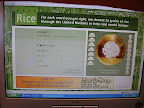
We won!!! We had a great time doing the activities for the Freerice.com marathon and making our Wiki. Here are some pictures of the activities:


The SWAT team wiki has turned out to be an amazing experience. Students are much more excited about doing work at home. Also, we now have 16 pages on the wiki with over 300 revisions of the pages. It is very interesting to see how much they use it. I plan on using it more in the next quarter. There will be a learning center assignment due where about 60 kids will be using the wiki to track results of the Super Tuesday. I am pretty excited about it and I hope it will go well. I will post more after we get the video call with the NASA scientists. Wish us luck.

Twitter and a Mini-poll.

Let's get right down to it. I would like to request some comments for my Political Aspects of Education class that I am taking right now. First question is:

What are the major challenges facing American public education right now?

The second questions is for Utahns and other informed parties that know what happened here last year with school choice and school vouchers.

After the voucher vote this last year, do you intend to vote for different legislature members this year?

Please respond to these two questions in the comments. You can post anonymously, if you feel so inclined.

Now on to the good stuff. I have been using Twitter since the middle of December. To be honest, I don't know how I got started on it. I think that it might have been from my friend, Chris, but I could be wrong. Anyway, it was about the same time that I started using Facebook. Facebook mostly helped me get better at Scrabble (and connect with some old friends, I guess). The best thing about Twitter is that I have been using it a lot to help me get ideas for teaching. I mostly just read what other people mention, and I have met some really neat people and learned so much I don't even know where to begin.

I am collaborating with another middle school teacher in Kansas on a wiki for the presidential primaries. I also got connected with some other edutech bloggers here in Utah, in my district even, and that is really neat also. I have felt so alone recently because I don't feel like anyone in my district, even the tech guy at my school, is very social web literate or even interested in it. I just recently learned that one other person at my school does have a blog, but it is private and I have not received an invitation. I also have found other middle school teachers on twitter and that helps also because I can bounce ideas off of them as well as get brand new ideas from them.

I am so impressed with how kind the community has been in helping me out and using it as a tool to help others. I enjoy knowing that many of my questions are answered without too much waiting.